In construction, energy, infrastructure, mining and industrial projects, site organisation is one of the most important factors directly influencing the success of a project. In large-scale projects, it is not only necessary to construct the main structure, but also to ensure that the teams working on site are accommodated in a safe, orderly and efficient environment. Construction site and mobilisation facilities are among the primary systems designed to meet this need.
Construction site and mobilisation structures are building solutions comprising offices, canteens, dormitories, showers, toilets, security units, first-aid posts, storage areas, social spaces and technical units, erected on the project site for either temporary or long-term use. These structures ensure that site operations are carried out in a more controlled manner, from the project’s initial phase right through to handover. Particularly when manufactured using prefabricated and modular systems, they offer the benefits of rapid assembly, portability and cost-effectiveness.
A construction site refers to the work area where construction activities are carried out. However, in modern projects, a construction site is not merely an area where production takes place; it is also an operational centre where workers are accommodated, managers carry out planning, logistics are organised and safety procedures are monitored. For this reason, the proper planning of construction site facilities enhances the overall efficiency of the project.
What Are Construction Site Mobilisation Structures Used For?
Construction site and mobilisation facilities provide the essential living and working spaces required by the project site. These facilities ensure a well-organised working environment for the teams working on site. Project management offices, technical team areas, meeting rooms, canteens, dormitories and social facilities can all be set up as part of a single plan.
Mobilisation facilities are of great importance, particularly in projects carried out in areas far from the city centre. This is because workers’ accommodation, catering, hygiene and rest requirements must be met directly on site. This both minimises time lost and helps the operation to proceed in a more controlled manner.
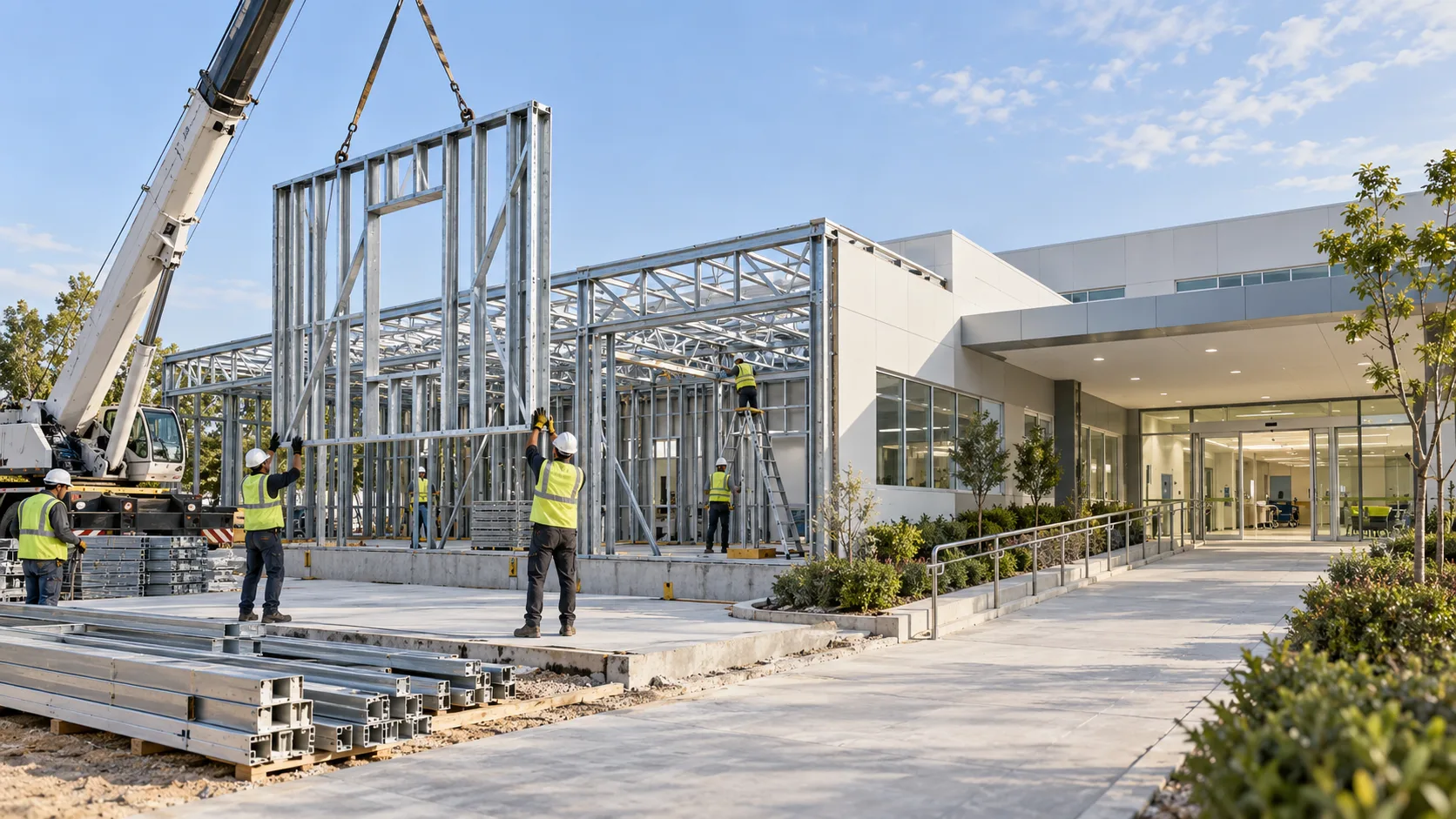
One of the main reasons prefabricated systems are preferred in this field is that the structures can be erected quickly. Rather than having to wait weeks for permanent building construction once a project has started, pre-manufactured modules can be delivered to site and made ready for use in a short space of time. For this reason, prefabricated site structures offer a robust solution, particularly for projects where time management is critical.
How is Mobilisation Planning Carried Out?
Mobilisation planning is the process of determining which structures are to be erected on the project site, their size and the order in which they are to be erected. This stage is shaped by the scale of the project, the number of workers, site conditions, climatic conditions and the duration of use.
The first step is a needs analysis. It is necessary to determine how many people will be working on site, how many will be accommodated, how much office space will be required, and how the communal areas should be planned. For example, the mobilisation requirements for a short-term road project are not the same as those for a long-term power station project. Whilst more practical and portable solutions may be prioritised in one, the other may require more comprehensive living quarters.
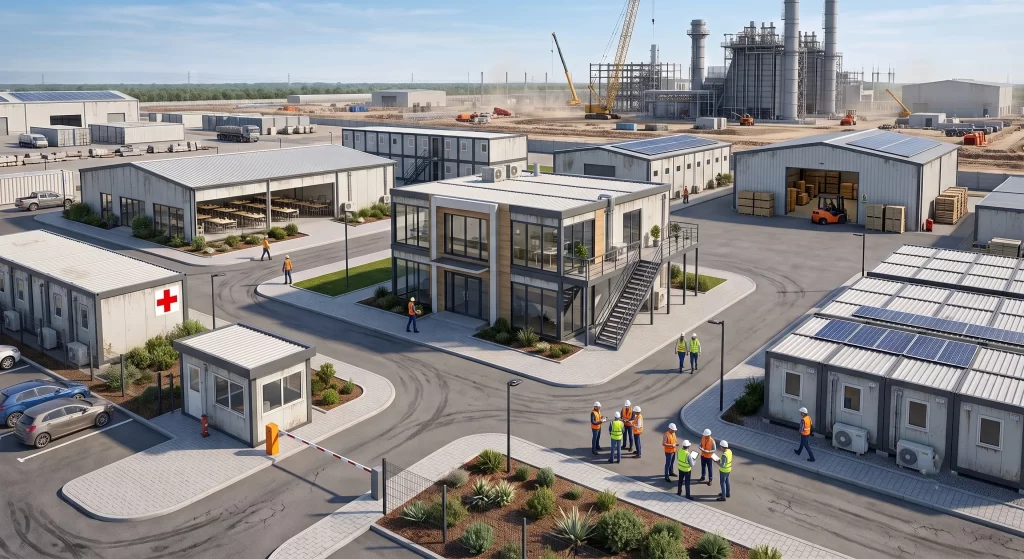
The second step is the layout plan. The office, canteen, dormitory, storeroom, security post and technical areas must be correctly positioned on site. High-traffic areas such as the canteen and dormitory should be planned in easily accessible locations, whilst storage and technical areas should be situated in such a way as not to obstruct operational flows. Furthermore, vehicle entry and exit points, emergency routes and security checkpoints must also form part of this plan.
The third step is infrastructure preparation. Requirements such as electricity, clean water, wastewater, internet, climate control and fire safety must be assessed in advance. Prefabricated structures can be erected quickly; however, if the infrastructure plan is not drawn up correctly, disruptions may occur during use. For this reason, mobilisation planning involves not only the selection of the structure but also the organisation of all aspects of life on site.
What Types of Structures Are Found on a Construction Site?
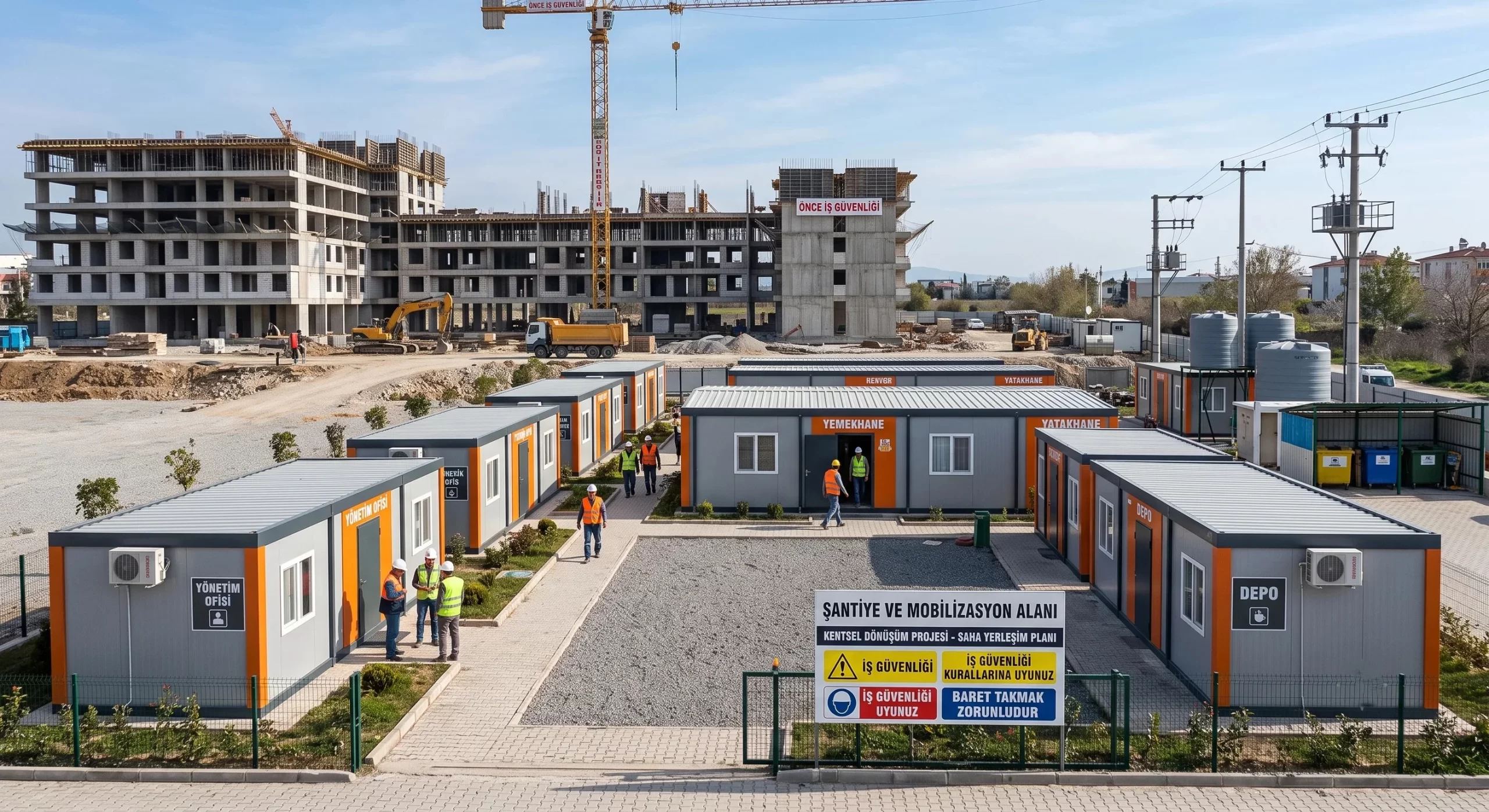
Construction site and mobilisation facilities may consist of various units depending on the project’s requirements. The most commonly used areas include management offices, technical offices, meeting rooms, staff dormitories, canteens, shower and toilet facilities, security booths, first-aid posts, changing rooms and storage areas.
Management offices serve as the hub for site coordination. Daily work plans, team meetings, health and safety checks and reporting are carried out in these areas. Dormitories and communal areas, meanwhile, cater to staff’s need for rest. Canteens should be planned according to the number of staff on site and organised in accordance with hygiene standards.
In some projects, container systems also become an important part of mobilisation structures. Particularly in projects where portable, modular and practical solutions are required, accommodation containers offer the advantage of rapid deployment. These structures can meet temporary living and operational needs in various settings.
The Advantages of Construction Site and Mobilisation Structures
The greatest advantage of site and mobilisation structures is their rapid installation. Thanks to the prefabricated production model, structural elements are manufactured in a factory setting and assembled on site within a short timeframe. This accelerates the project’s start-up phase. Particularly in projects subject to time constraints, this advantage makes a direct contribution to the overall project schedule.
Another advantage is portability. Mobilisation structures can be dismantled once a project is complete and reused at a different site. This feature offers a cost advantage, particularly for companies carrying out projects in multiple regions. The ability to reuse the same structure across different projects enhances the return on investment.
Cost control is also a significant advantage. Constructing temporary buildings on-site using traditional methods can be more labour-intensive and time-consuming. Prefabricated and modular site structures, on the other hand, facilitate budget management as they offer a more structured production process. Furthermore, maintenance and operational costs can be better controlled through the appropriate choice of materials.
Another benefit of site structures is that they ensure health and safety and maintain order. The arrangement of offices, canteens, dormitories and technical areas on site according to a specific layout makes worker movements, equipment use and day-to-day operations safer. A disorganised site layout not only reduces productivity but can also increase the risk of accidents at work.
What Should You Bear in Mind When Choosing the Right Construction Site Layout?
When selecting a site and mobilisation structure, the duration of the project should be assessed first. Whilst more practical and portable solutions may be sufficient for short-term projects, more comfortable, insulated and durable structures should be preferred for long-term projects.
The second important issue is climatic conditions. The insulation, roofing and external cladding specifications of buildings intended for use in hot, cold, windy or rainy regions must be determined accordingly. Employee comfort is not merely a social issue, but also a key factor affecting work productivity.
The third issue is capacity. Staff numbers must be calculated accurately, and dormitories, canteens, shower and toilet facilities must be planned accordingly. Insufficient capacity can lead to disorder and dissatisfaction on site. Conversely, facilities that are larger than necessary can unnecessarily inflate the budget. It is therefore important to carry out a thorough needs analysis.
Finally, the manufacturer’s experience and approach to the project should be assessed. Site structures are not merely about the handover of the structure; proper planning, the selection of suitable materials, rapid assembly and after-sales support are also part of the process. For this reason, working with companies that are reliable and able to offer project-specific solutions provides long-term benefits.
Well-Planned Mobilisation Structures Speed Up the Project
Construction site and mobilisation structures form the basis of site organisation in large-scale projects. A properly planned mobilisation process enhances worker comfort, streamlines operational workflows, supports health and safety, and facilitates project management. The rapid installation, portability and cost advantages offered by prefabricated and modular systems make these structures a strong option for modern projects.
For a project to progress successfully, attention must be paid not only to the main construction process but also to the planning of living and working areas on site. When every unit – from offices to dormitories, and from canteens to technical areas – is correctly positioned, the site operates more efficiently. Therefore, to find out more about site and mobilisation structures, please contact us.