

Construction site mobilisation facilities should not be viewed merely as temporary workspaces in large-scale projects. In construction, infrastructure, energy, mining and industrial facility projects, the mobilisation process is a critical step that directly affects site organisation, worker productivity, logistics flow and the overall project cost. Therefore, when properly planned, site mobilisation structures not only meet accommodation or office requirements but also make a significant contribution to the project’s budget management.
In a project, costs do not consist solely of the main construction items. Numerous support facilities—such as accommodation for on-site staff, dining areas, office units, storage solutions, security posts, technical team areas, and shower and toilet facilities—account for a significant portion of the total cost. If these facilities are set up haphazardly, this results in both a loss of time and additional expenditure. Therefore, selecting the right mobilisation facilities ensures cost control right from the start of the project.
Site mobilisation is, broadly speaking, the process of preparing a project site for work to commence. This process is also important from the perspective of project management. This is because a properly planned site speeds up the workflow, enables teams to work more efficiently and prevents unexpected costs.
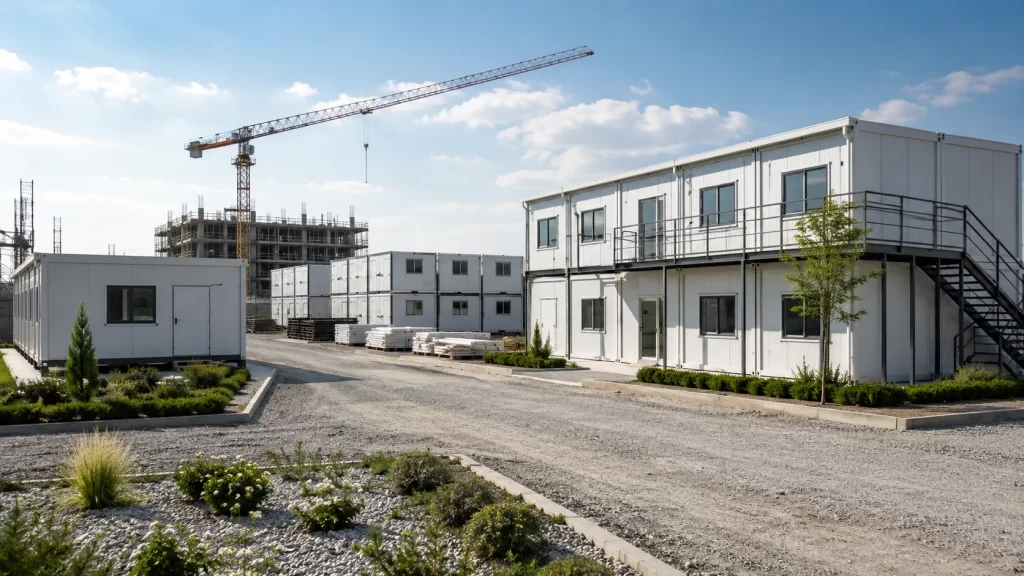
Keeps Initial Set-up Costs Under Control
The most significant impact of site mobilisation structures on project costs is seen during the initial set-up phase. Constructing temporary buildings on site using traditional methods can incur high costs in terms of both time and labour. For reinforced concrete temporary structures, foundation preparation, formwork, concrete, labour and long waiting times may be required. In contrast, with prefabricated and modular systems, structural elements are manufactured off-site and assembled on-site in a short space of time.
This helps the project get off the ground more quickly. Particularly in projects with tight schedules, even a delay of a few weeks can lead to a significant increase in costs. Thanks to the advantage of rapid installation, prefabricated systems both minimise time loss and make labour planning more efficient. For this reason, prefabricated site huts offer a robust solution for companies seeking to maintain cost control from the outset of a project.
Increases Labour Productivity
One of the most significant factors affecting construction site costs is labour productivity. Ensuring that workers have access to well-organised, safe and comfortable areas on site has a direct impact on their daily work performance. Inadequate rest areas, disorganised canteen arrangements, remote accommodation solutions or a disorganised office layout can cause teams to lose time.
When mobilisation structures are positioned correctly, workers can reach the areas they need more quickly. Placing facilities such as offices, canteens, dormitories, changing rooms and storerooms in a way that suits the flow of the site facilitates day-to-day operations. This, in turn, ensures that working hours are used more efficiently.
For example, if staff accommodation is located off-site, daily costs relating to transport, travel and time may arise. Conversely, dormitories and communal areas situated on-site can reduce the need for transport, thereby lowering overall operational costs. For this reason, mobilisation planning is a strategic decision not only in terms of site selection but also in terms of workforce management.
It Retains Its Investment Value Thanks to Its Portability
Another significant impact that construction site mobilisation structures have on costs is the advantage of portability. Once a project is completed, modular or prefabricated structures can be dismantled and reused on another project. This feature offers a major advantage, particularly for companies that are constantly carrying out projects in different locations.
Traditional temporary structures often become unusable at the end of a project, or significant losses occur during the dismantling process. However, prefabricated site structures can be moved to different sites if the correct production and assembly systems are in place. This allows the company to utilise the same investment across multiple projects.
This reduces the cost per structure in the long term. Rather than being borne by a single project, the initial investment cost can be spread across different projects. Standard requirements in particular such as site offices, dormitories, canteens and security huts become more cost-effective when provided by reusable structures.
Simplifies Logistics and Time Management
The impact of mobilisation structures on project costs should not be assessed solely on the basis of the structure’s price. Logistics, transport, assembly time and on-site layout also determine the total cost. In a poorly planned mobilisation process, the transport, positioning and connection of structures may take longer.
In properly planned prefabricated systems, however, the production, delivery and assembly stages proceed in a more controlled manner. It is possible to determine in advance which structure will arrive on site and when, in what order they will be erected, and what infrastructure connections they will require. This saves time for project managers.
Improved time management also reduces indirect costs. Teams spend less time waiting, machinery is used more efficiently, and site organisation runs more smoothly. Particularly on large projects, even a time saving of just a few days can represent a significant cost advantage.
Can Reduce Energy and Operating Costs
The quality of materials used in site buildings has a direct impact on operating costs. Buildings with inadequate insulation can increase cooling costs in summer and heating costs in winter. This becomes a significant cost factor, particularly in long-term projects.
The use of high-quality insulation materials in wall and roof systems helps to reduce energy consumption. Site facilities designed to suit local climatic conditions not only improve worker comfort but also help to better control electricity and air-conditioning costs.
This detail is particularly important in accommodation and communal areas. Ensuring thermal comfort in dormitories, canteens and rest areas—where staff spend long periods of time—offers benefits in terms of both staff satisfaction and energy efficiency. In this regard, modular solutions such as living containers can offer a practical alternative for temporary or long-term living spaces on site.
Reduces Maintenance and Repair Costs
High-quality temporary structures help to reduce maintenance and repair costs during the project. In site structures built with low-quality materials, problems with doors, windows, roofs, floors or external cladding may occur more frequently. This not only incurs additional costs but also disrupts site operations.
Structures with clear technical specifications, defined material quality and high production standards offer a longer service life. Ease of maintenance is of particular importance for mobilisation structures that are to be reused across multiple projects. The fact that a structure can be easily dismantled and transported, requires minimal intervention after assembly, and remains durable throughout its service life enhances its investment value.
Low maintenance costs can offer a more significant advantage than the initial purchase price. This is because a structure that appears inexpensive may end up increasing the total cost if it requires frequent repairs or refurbishment during its service life. For this reason, when selecting a mobilisation structure, it is important to assess not only the initial price but also the total cost over its service life.
Planned Development Prevents Additional Costs
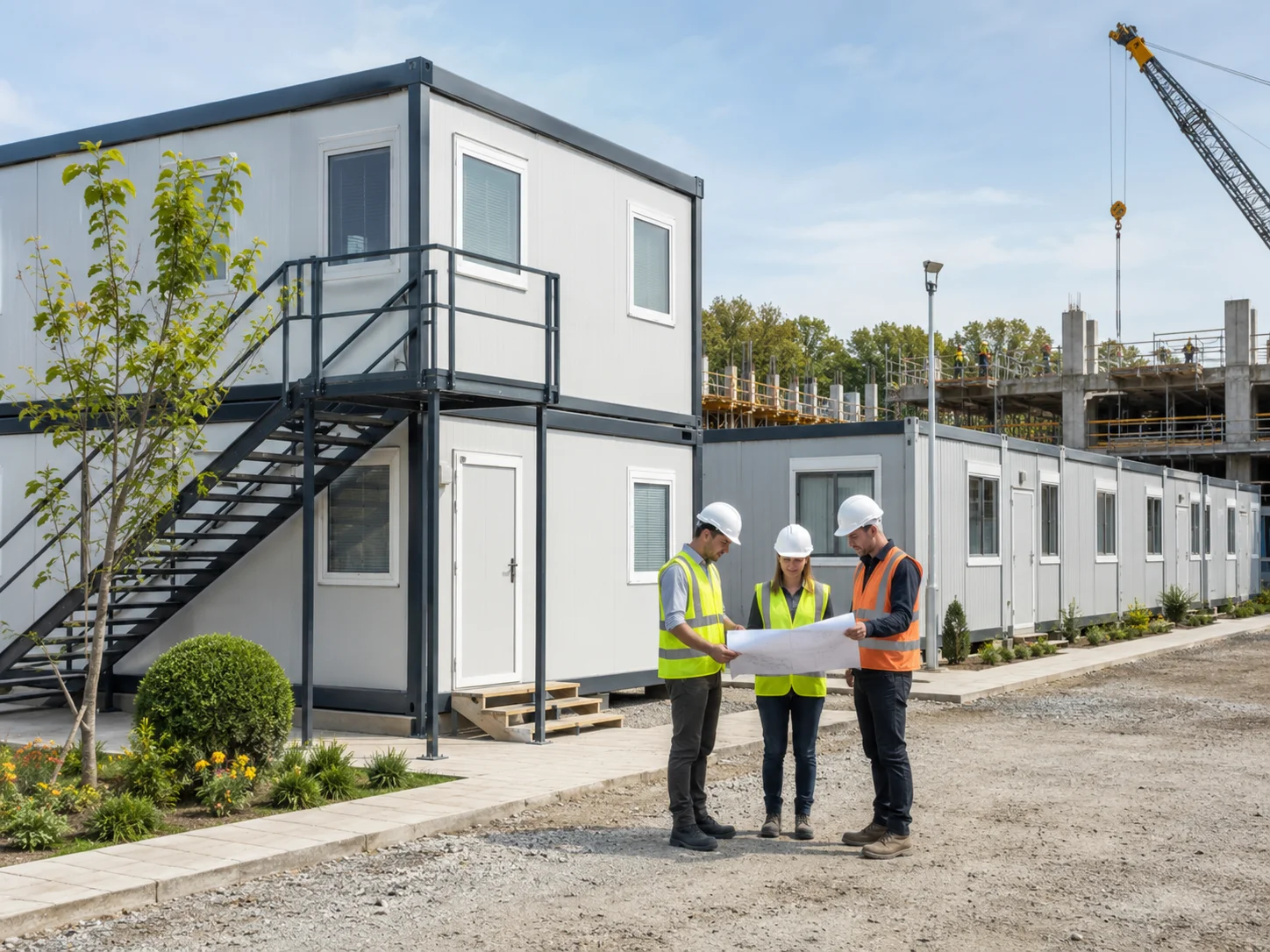
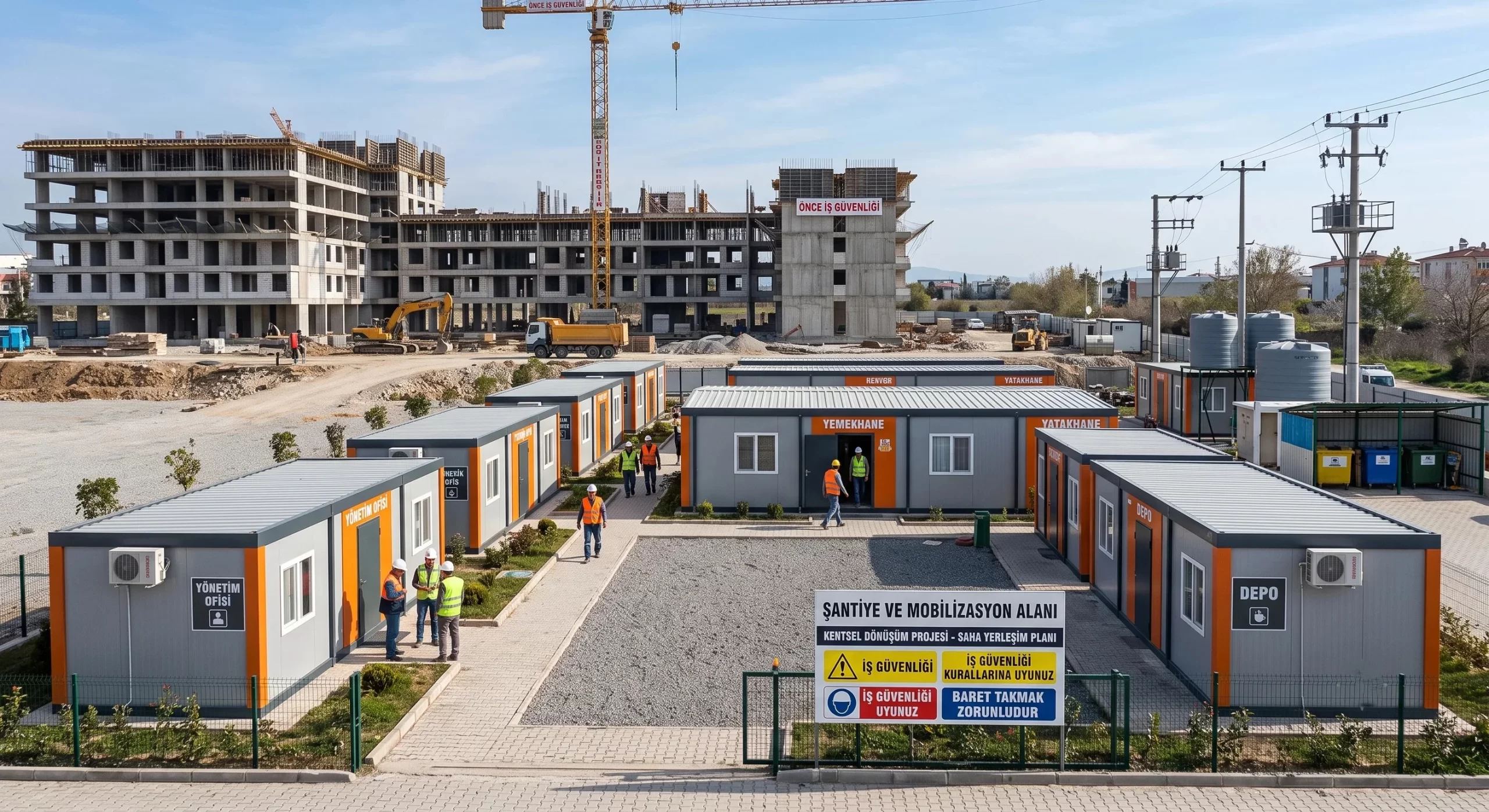
The layout plan for site mobilisation facilities is also a key factor affecting costs. Incorrect positioning of offices, dormitories, canteens, storerooms and security posts can hamper day-to-day operations. This increases staff movement, makes equipment usage inefficient and leads to a loss of time.
A well-planned site layout, on the other hand, minimises unnecessary movement. Having warehouses located close to work areas, positioning canteens and social areas in line with staff flow, and siting offices in the right locations from a management perspective all help to reduce costs indirectly. Furthermore, emergency routes, fire safety and vehicle access plans should also be considered from the outset.
If this planning is not carried out, it may subsequently be necessary to relocate structures, renew infrastructure connections or install additional units. This places an extra burden on the project budget. Therefore, drawing up the correct site layout plan during the mobilisation process prevents costs that may seem small at first but could escalate later on.
The Right Mobilisation Structure Protects the Project Budget
Construction site mobilisation structures are strategic structural solutions that directly and indirectly influence project costs. Advantages such as rapid installation, portability, labour efficiency, energy savings, low maintenance costs and planned site layout enable the total project budget to be managed more effectively.
Thanks to well-planned mobilisation structures, projects get off the ground more quickly, teams work more efficiently and site operations run more smoothly. Particularly in projects that are long-term or carried out across multiple locations, prefabricated and modular systems offer a significant advantage that enhances the return on investment.
In short, site mobilisation structures are not merely temporary workspaces. When chosen correctly and well planned, they are a key investment that contributes to the project’s cost management, speeds up the workflow and boosts site productivity.





 Turkish
  English