
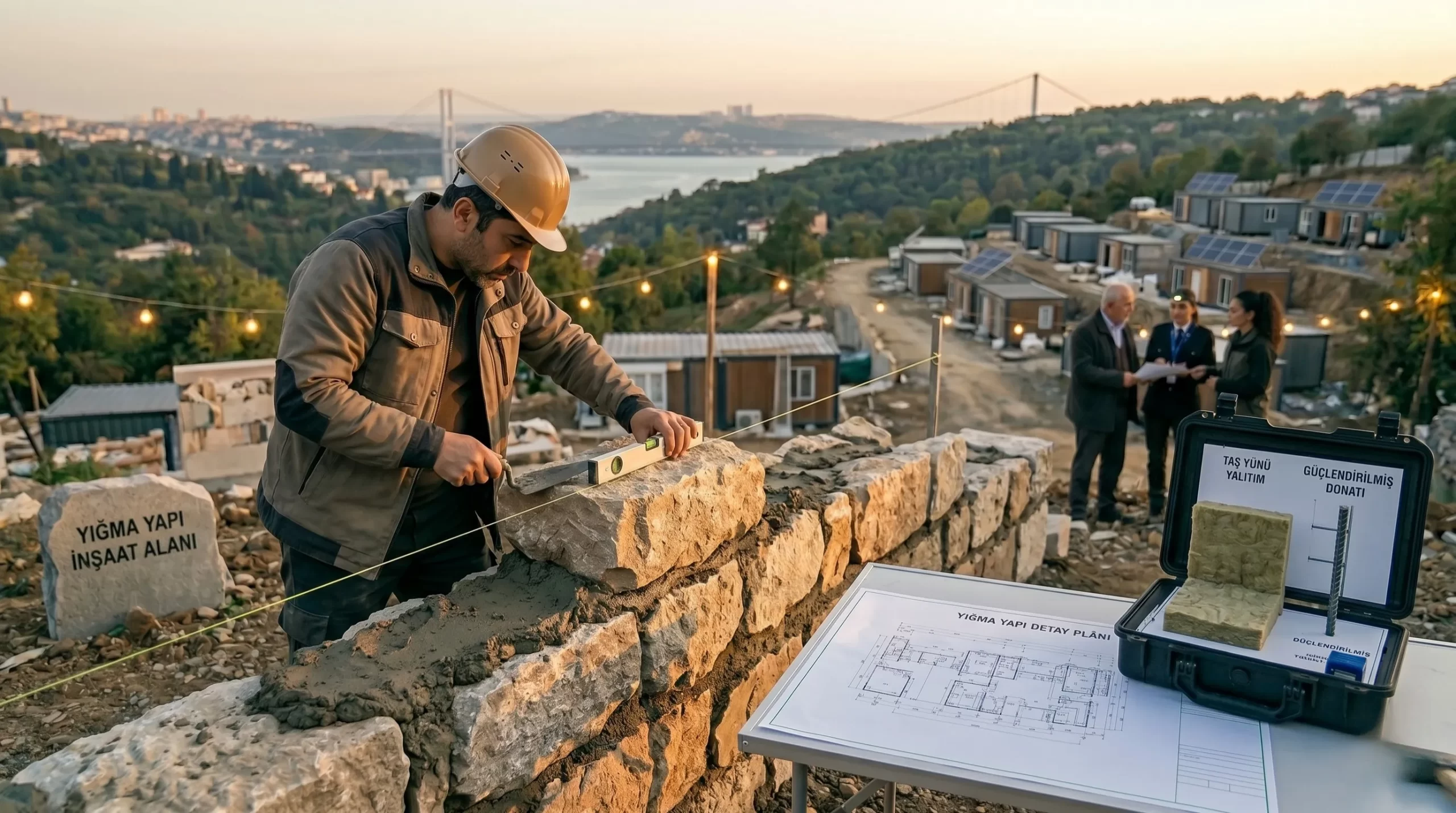
What is a load-bearing wall system? This question is among the most frequently searched topics by users considering building a home. This system, which has been used in the construction industry for many years, is defined as a type of structure in which the load-bearing function is performed directly by the walls rather than by columns and beams.
In this article, we will explore the most frequently asked questions about what is a masonry structure, how it is constructed, what its advantages are, and how it differs from reinforced concrete systems.
Bu içerikte yığma yapı nedir, nasıl yapılır, avantajları nelerdir ve betonarme sistemlerden farkları nelerdir gibi en çok merak edilen detayları inceleyeceğiz.
What Is a Masonry Structure and How Does It Work?
What is a masonry structure? The most basic answer to this question is that the structure’s load-bearing system consists of walls. While in reinforced concrete structures the load is carried by columns and beams, in masonry structures the entire load is transferred directly to the walls.
For this reason, the quality of the materials used in masonry construction systems and the thickness of the walls are of great importance. Materials such as stone, brick, aerated concrete, and cinder blocks are particularly widely used.
What Are the Characteristics of Masonry Construction?
When examining the characteristics of masonry construction, it becomes clear that this building system is rooted in traditional architectural principles.
- The structural system consists of walls
- It is typically used in low-rise buildings
- Brick or stone is the preferred material
- There is no column and beam system
- It has a thick-walled structure
The masonry construction system is frequently used, particularly in rural homes and detached houses.
What Are the Types of Masonry Structures?
What is a masonry structure? Just as the topic itself is important, so is the question of what materials are used to build it. There are different types of masonry structures depending on the building materials used.
Masonry Construction
It is one of the most widely used systems. Brick materials are preferred in many projects due to their affordability. They are frequently used in load-bearing systems, particularly in small-scale residential projects.
Stone Masonry Structure
Stone masonry construction systems are among the traditional building solutions that have been used from the past to the present. Thanks in particular to the use of natural stone, they can offer an aesthetic appearance.
Aerated Concrete and Brick Structures
In modern building systems, lighter materials are increasingly being preferred. For this reason, aerated concrete and bricks can be used in some masonry construction projects.
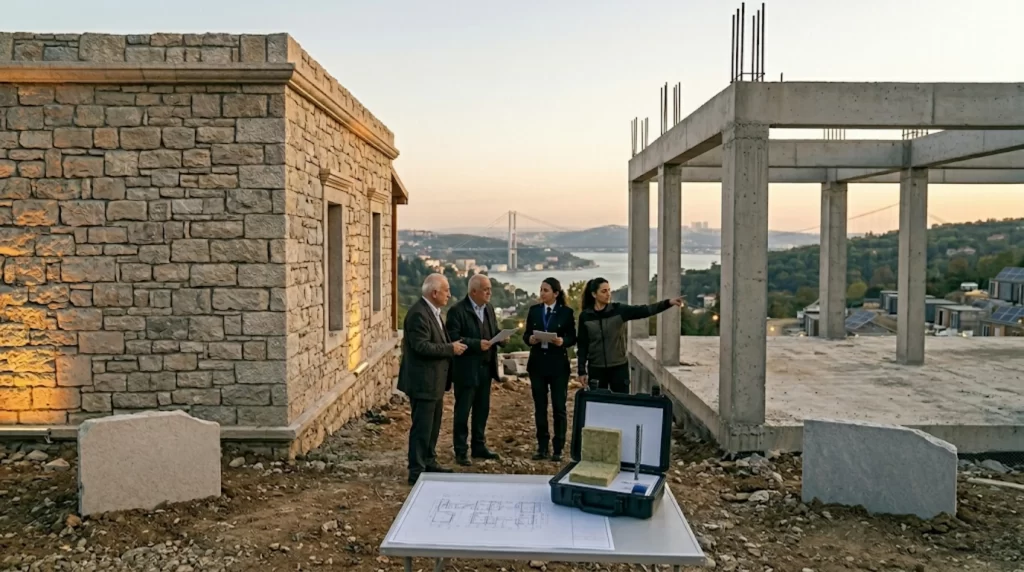
Differences Between Masonry and Reinforced Concrete Structures
What is a masonry structure? One of the topics users researching this question are most curious about is the difference between masonry structures and reinforced concrete structures.
Difference in the Support System
While reinforced concrete structures feature a column-and-beam system, masonry structures rely on walls to provide structural support.
Difference in Number of Floors
Betonarme sistemler çok katlı projelere uygunken yığma yapılar genellikle tek katlı veya iki katlı yapılarda kullanılmaktadır.
Difference in Earthquake Resistance
The seismic resistance of masonry structures varies depending on the materials used and engineering calculations. Modern reinforced concrete systems can offer solutions that are more compliant with seismic codes.
What Are the Advantages of Masonry Construction?
The advantages of masonry construction are particularly notable in terms of cost and ease of installation.
Economic Structure System
In some projects, masonry construction systems can be implemented at a lower cost.
Natural Thermal Insulation
Thanks to their thick walls, masonry buildings can offer a natural insulation advantage.
Simple Application Process
Düşük katlı yapılarda uygulama süreci daha hızlı ilerleyebilir.
What Are the Disadvantages of Masonry Construction?
The disadvantages of masonry construction are particularly significant in terms of earthquake safety.
Awareness of Earthquake Risk
Earthen structures built under older regulations may pose a higher earthquake risk.
Floor Limit
Because the structural system consists of walls, it is not suitable for use in high-rise projects.
The Difficulty of the Renovation Process
Modifying load-bearing walls can lead to structural problems.
Is a Masonry Structure Sturdy?
“Is a masonry structure sturdy?” is one of the most frequently searched topics among users. The durability of a structure depends on the quality of the materials used, engineering calculations, and the soil conditions.
Masonry construction systems designed in accordance with modern standards can be reasonably durable. However, expert engineering oversight is of great importance, especially in earthquake-prone areas.
Where Is Masonry Construction Used?
Today, masonry construction systems are increasingly:
- in village houses,
- in single-family homes,
- in garden houses,
- in low-rise residential projects
is used.
It continues to be preferred, particularly in rural areas, as part of traditional architecture.
Result
Proper engineering practices are of great importance in masonry construction systems, which are preferred particularly for their cost-effectiveness, natural appearance, and suitability for low-rise projects.
Özellikle maliyet avantajı, doğal görünüm ve düşük katlı projelere uygun yapısı nedeniyle tercih edilen yığma yapı sistemlerinde doğru mühendislik uygulamaları büyük önem taşır.
For more information on building systems and modern construction solutions prefabrik ev modelleri sayfamızı inceleyebilirsiniz.
For detailed information on earthquake regulations and building safety, visit the AFAD official website.




 Turkish
  English